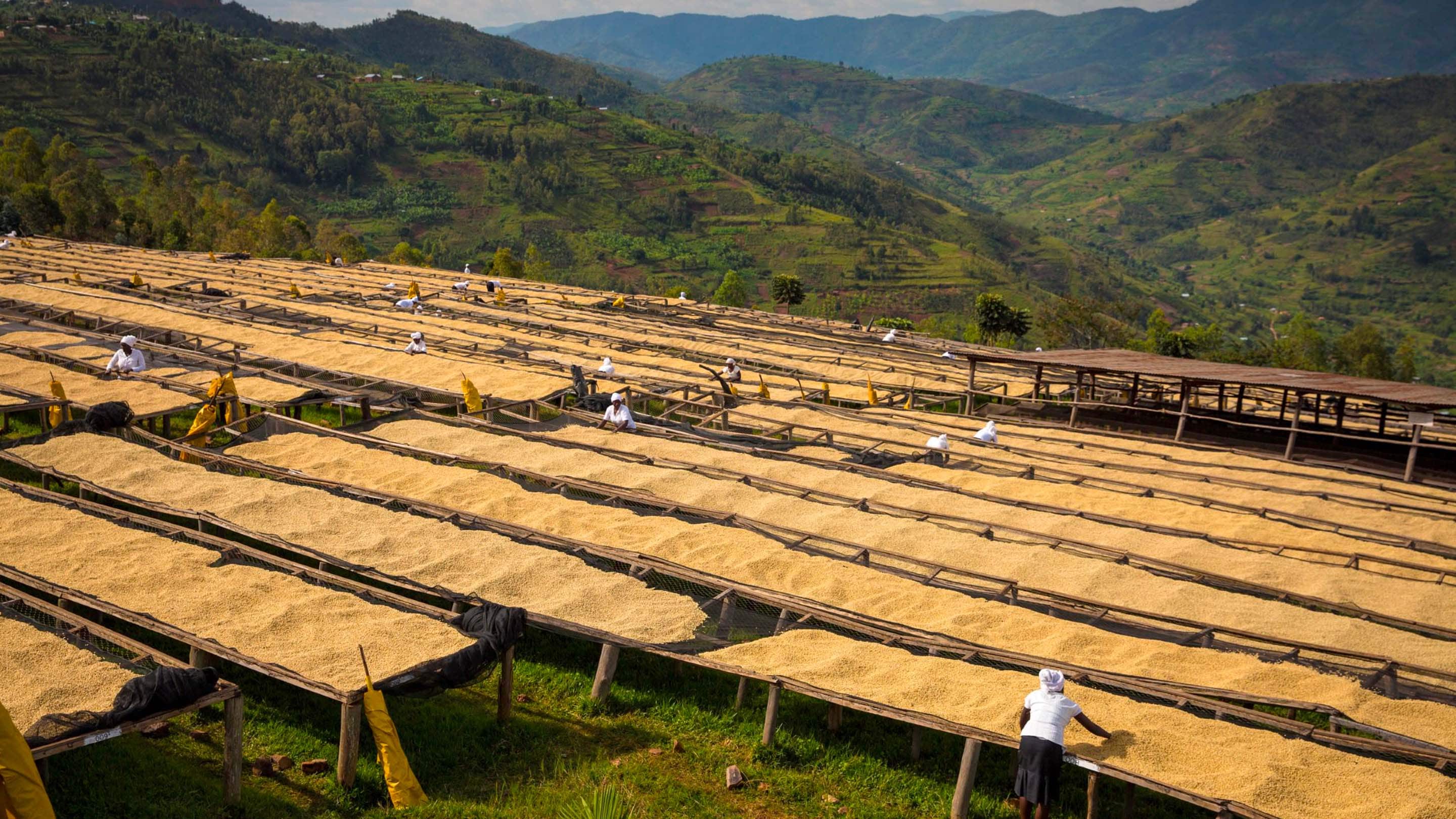
Coffee

We take a holistic approach using responsible purchasing practices, farmer loans and forest conservation programs.

Ethically Sourced Coffee Goals and Progress

Goal: Ensure 100% of our coffee is ethically sourced by 2015.

Progress: 93% of our coffee was ethically sourced in 2012, including 90% through C.A.F.E. Practices.
Coffee Purchasing Info Graph
To learn more about our work in coffee purchasing read our Global Responsibility Goals & Progress Report.

We are committed to buying and serving high-quality coffee that is responsibly grown and ethically traded. We honor this commitment through our responsible coffee purchasing practices, farmer support centers, loan programs and forest conservation efforts. When we buy coffee this way, we believe that it helps foster a better future for farmers and helps mitigate the impacts of climate change for the planet.

The cornerstone of our approach is Coffee and Farmer Equity (C.A.F.E.) Practices, our comprehensive coffee-buying program that ensures coffee quality while promoting social, economic and environmental standards. C.A.F.E. Practices, which we developed in collaboration with Conservation International (CI) a decade ago, has created significant social and economic impacts for more than one million workers, and environmental improvements on the thousands of participating farms.

Farms and mills are evaluated using a comprehensive scorecard of more than 200 indicators by third-party verification organizations, which are overseen by SCS Global Services. In 2012, 90 % of our coffee was C.A.F.E. Practices verified.

Purchasing third-party certified or verified coffees not only meets our customers’ expectations, but can also help protect the environment and the livelihood of farmers in coffee-growing regions. We have offered Fairtrade coffee since 2000, and are now one of the largest purchasers of Fairtrade certified coffee in the world. In 2012, 44.4 million pounds (8.1 %) of our coffee purchases were Fairtrade certified. We also purchased 8.7 million pounds (1.6%) of certified organic coffee in 2012.

In 2012, 93 % of our coffee was ethically sourced through C.A.F.E. Practices, Fairtrade and/or other externally verified or certified programs, with some coffees receiving multiple verifications or certifications. It is our goal that by 2015, 100 % of our coffee will be sourced this way.

Another important component of our approach is a green coffee pricing model that aims to pay the prices premium quality commands, while fostering price stability and mutually beneficial relationships with suppliers. Starbucks sourced 545 million pounds of premium quality green (unroasted) coffee from 29 countries in 2012, and paid an average price of $2.56 per pound. In 2012, 98% of our contracts included an economic transparency clause.

What We’re Doing Now
As we buy coffee, we aim to foster a better future for farmers and a more stable climate for the planet. Doing this helps create a long-term supply of the high-quality beans we’ve been carefully blending, roasting and packing fresh for more than forty years.

CAFE PractgicesOver the last decade, Conservation International has helped us develop buying guidelines that address our principles for ethical sourcing. Called Coffee and Farmer Equity (C.A.F.E.) Practices, these guidelines help our farmers grow coffee in a way that’s better for both people and the planet. C.A.F.E. Practices is a comprehensive set of measurable standards focused on the following four areas:

Product Quality:
All coffee must meet our standards for high quality.

Economic Accountability:
Economic transparency is required. Suppliers must submit evidence of payments made throughout the coffee supply chain to demonstrate how much of the price that we pay for green coffee gets to the farmer.

Social Responsibility:
Measures evaluated by third-party verifiers help protect the rights of workers and ensure safe, fair and humane working and living conditions. Compliance with minimum-wage requirements and prohibition of child and forced labor is mandatory.

Environmental Leadership:
Measures evaluated by third-party verifiers help manage waste, protect water quality, conserve water and energy, preserve biodiversity and reduce agrochemical use.

We believe in the continuous improvement of our suppliers and know objective measurement and evaluation is critical. Farms and mills are evaluated by third-party verification organizations overseen by SCS Global Services. In October 2012, we released an update to C.A.F.E. Practices. All of the information we received from farmers, suppliers and stakeholders has allowed us to improve C.A.F.E. Practices and make farmer participation more meaningful and relevant.

Important additions to the program include practices for supporting the long-term productivity of coffee farms through coffee renovation, or replanting. Additionally, tracking climate change impacts and creating adaptation plans are encouraged to minimize the effects farmers experience from climate change.

Our Farmer Support Centers are available to support farmers in creating farm management and work plans and achieving their goals.

How are Coffee Farms and Climate Change Linked?

Team Chiapas

The Starbucks and Conservation International partnership supports coffee farmers in mitigating the impacts of climate change.

Watch a video
Learn More

Measuring the Impact of C.A.F.E. Practices

Cultivating Change by our Coffee Sourcing

See the most recent results of how the C.A.F.E. Practices program impacts people, products and the planet.